
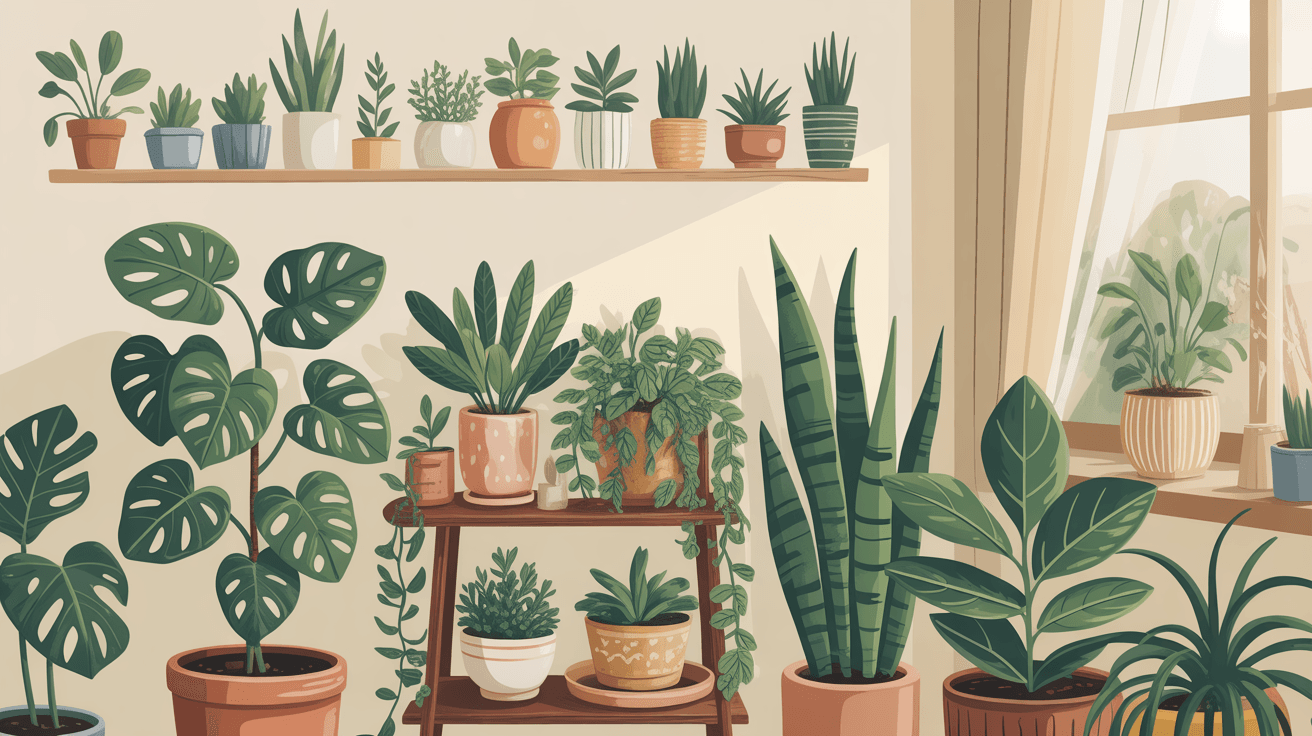
15 Creative Ways to Display Houseplants at Home
There’s a moment every plant lover hits: the windowsill is full, the side table is full, and yet somehow you just brought home one more pothos cutting. Before you start eyeing the kitchen counter, know that “more plants” and “more space” aren’t actually the same problem. With a little creativity, almost any room has untapped real estate for greenery — you just have to look up, out, and around instead of only at the floor.
Here are display ideas that work whether you’re styling a single statement plant or trying to squeeze a genuine jungle into a studio apartment.
Go Vertical First
Floor and tabletop space fills up fast, but walls rarely do. A few ways to reclaim it:
- Floating shelves staggered at different heights let you build a layered, gallery-wall effect with trailing plants like pothos or string of pearls spilling over the edges.
- Macrame or ceramic hangers are ideal for plants that like to cascade — think spider plants, English ivy, or a well-grown Rhipsalis.
- Wall-mounted planters (test tube style or pocket-style felt planters) work well for small propagations and herbs, and turn an empty wall into a living piece of art.
- Curtain rods or tension rods mounted just below a window can hold a row of hanging pots for a soft, plant-filled light filter.
Use Height Differences to Create Depth
A cluster of plants all at the same height reads as flat, no matter how healthy they are. Plant stands solve this instantly. A tiered ladder-style stand, a few individual stands of varying heights, or even stacked stools and crates let you build a mini indoor landscape with taller plants like a fiddle leaf fig or dracaena anchoring the back and smaller trailing plants stepping down in front.
If you don’t want to buy dedicated stands, repurpose what you already own: a stack of vintage books, an old side table, or a wooden stool all add instant elevation.
Group by Light, Not Just Looks
It’s tempting to arrange plants purely by color and shape, but the most successful displays start with light requirements. Bright, indirect light near an east- or west-facing window is prime real estate for plants like pothos, philodendron, and calathea. Lower-light corners are better suited to ZZ plants, snake plants, or peace lilies. Grouping plants with similar needs together also makes watering and misting routines much simpler — no more remembering which plant on the shelf needs which treatment.
Let Empty Corners Do Some Work
An awkward, underused corner is one of the best display opportunities in a home. A tall plant like a rubber tree, corn plant, or areca palm can fill a dead corner and add real presence to a room without eating into usable floor space. Pair it with a woven basket planter for texture, or uplight it in the evening with a small floor lamp for a dramatic silhouette after dark.
Try Unexpected Rooms
Living rooms and windowsills get all the attention, but plants can transform spaces you might not think of:
- Bathrooms with a window and decent humidity are great for ferns and calatheas that love moisture in the air.
- Kitchens are a natural home for herbs on a sunny sill, plus trailing plants above cabinets where they’re out of the way of cooking splatters.
- Home offices benefit from a desk-side plant or two — good for focus, and an easy way to add life to a space you stare at all day.
- Entryways set the tone for the whole home; a single striking plant by the door makes a strong first impression for guests (and you, coming home).
Mix Pots and Textures on Purpose
Uniform pots look tidy, but a mix of textures — terracotta, woven baskets, a glazed ceramic piece, a concrete planter — creates visual interest and keeps a plant collection from feeling like a matched set from a catalog. If you want cohesion without matching everything exactly, pick one consistent element, like all-neutral pot colors or all-round shapes, and let the plants themselves provide the variety.
Frequently Asked Questions
How do I display houseplants in a small apartment?
Lean on vertical space rather than floor space. Wall shelves, hanging planters, and a single well-placed plant stand can hold a surprising number of plants without making a small room feel cluttered. Trailing plants in hanging pots are especially efficient since they use air space that would otherwise go unused.
Should all my displayed plants match in pot style?
Not necessarily. Matching pots can look polished, but a curated mix of textures and materials often looks more intentional and collected-over-time, which is a look many plant lovers actively want. The key is picking one unifying thread, like color or shape, so the mix feels deliberate rather than random.
Is it bad to group plants closely together?
Generally no — many plants benefit from grouping since it raises the humidity around them as they transpire. Just make sure each plant still gets enough light and airflow, and separate anything currently dealing with pests so it doesn’t spread to its neighbors.
This article was written with AI assistance and edited by the Potted & Proud team.
And once your shelves, corners, and windowsills are looking like the indoor jungle you’ve always wanted, you can wear the obsession too — Potted & Proud’s plant-lover tees and gifts are made for exactly this kind of plant-parent pride.