Do Air-Purifying Houseplants Really Clean Your Air?
If you’ve ever stood in a garden center squinting at a tag that says “purifies air,” you’re not alone. Air-purifying houseplants are one of the most-searched plant topics out there, and for good reason: the idea of a leafy little machine quietly scrubbing your living room air sounds almost too good to be true. So let’s dig into what’s actually going on, which plants are worth bringing home, and how to think about “clean air” claims without falling for marketing hype.
Where the “air-purifying plant” idea comes from
The concept traces back to research from decades ago that tested how houseplants interact with certain airborne compounds in sealed laboratory chambers. Under those tightly controlled conditions, several common houseplants showed they could absorb trace amounts of volatile organic compounds (VOCs) like formaldehyde and benzene through their leaves and root systems.
The catch: a sealed test chamber is nothing like your actual living room. Real homes have airflow, HVAC systems, open windows, and far more air volume than a lab box. Follow-up research looking at realistic room-sized spaces has found that you’d need an impractical number of plants — think a small jungle, not a single pothos on your windowsill — to meaningfully change indoor air quality through leaf absorption alone.
So should you give up on air-purifying plants?
Not at all — you just want the right expectations. A few houseplants won’t replace an air purifier or a well-ventilated home, but they still offer real benefits:
- Humidity support: plants release moisture through their leaves, which can take the edge off dry indoor air, especially with AC running through late summer.
- Mental and mood benefits: having greenery around has been consistently linked to lower stress and better focus, which matters for indoor air quality in a different, very human way.
- A genuine, if modest, dent in VOCs if you have a good number of plants spread through a well-lit space.
In short: think of houseplants as one small piece of a healthy indoor environment, not a stand-alone air filter.
Houseplants worth growing for a fresher-feeling home
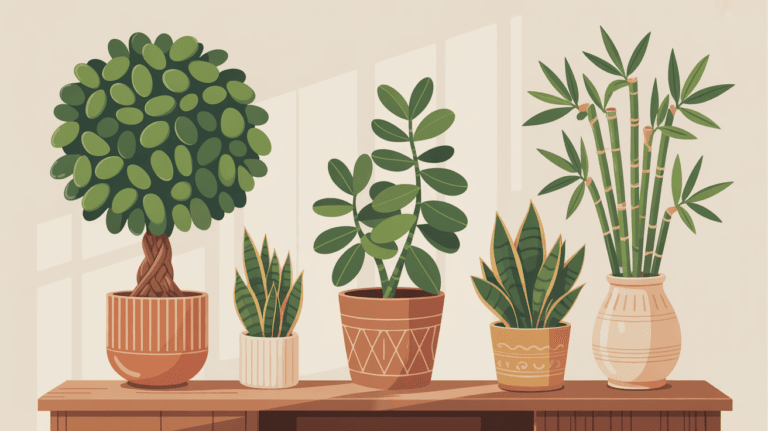
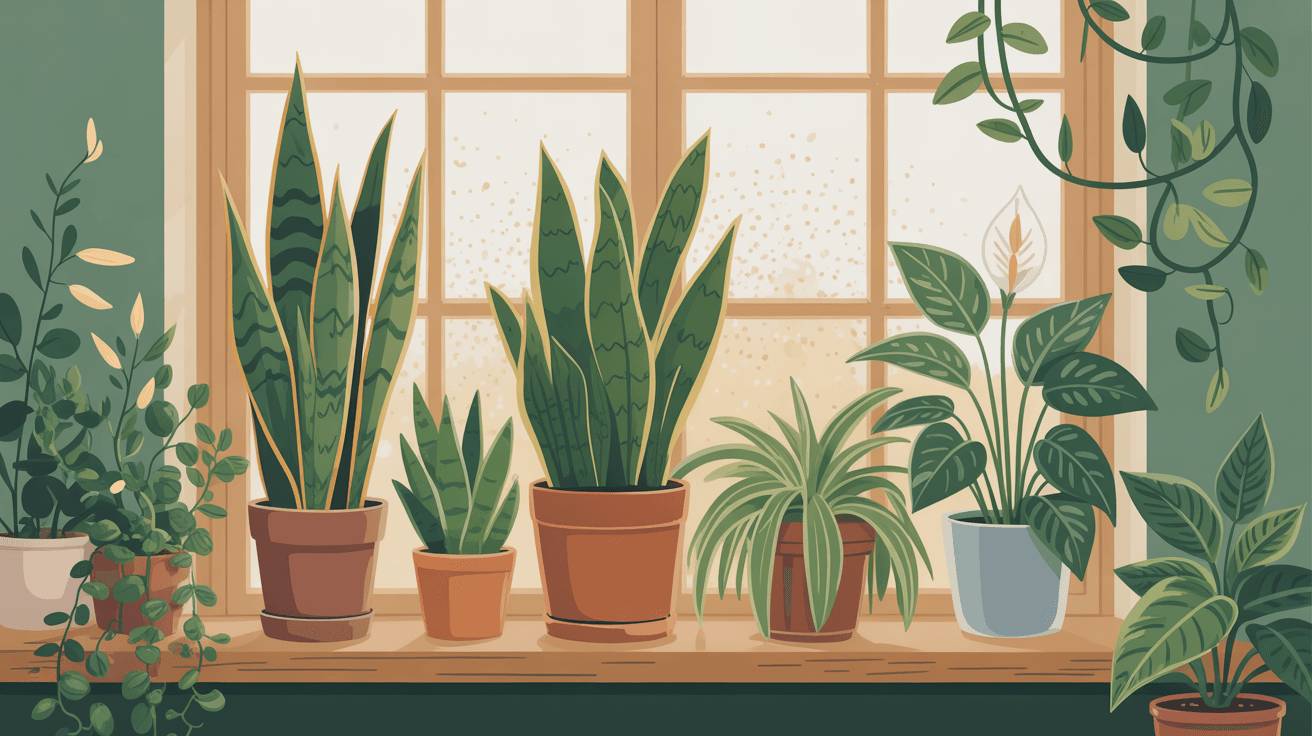
These are reliable, easy-care options that show up again and again in air-quality research and are genuinely low-maintenance for most homes:
- Snake plant (Dracaena trifasciata): nearly impossible to kill, tolerates low light, and releases oxygen at night — a nice one for the bedroom.
- Pothos: fast-growing, forgiving of missed waterings, and happy trailing off a shelf or hanging basket.
- Spider plant: extremely beginner-friendly, produces babies you can propagate and share.
- Peace lily: loves humidity and will droop dramatically when thirsty, so it basically tells you when to water it.
- Areca palm: a bigger statement plant that also adds humidity to dry rooms.
- Rubber plant (Ficus elastica): glossy, sturdy leaves and tolerant of a range of light conditions.
A quick note if you share your home with pets: peace lily and some ficus varieties are toxic to cats and dogs if chewed, so double-check safety before placing them somewhere curious paws can reach.
How to get the most benefit from your plants
- Group several plants together rather than isolating one in a corner — more leaf surface area, more benefit.
- Keep leaves dust-free with an occasional wipe-down; dusty leaves photosynthesize (and “breathe”) less efficiently.
- Pair plants with actual ventilation — cracking a window or running an air purifier does more heavy lifting than leaves alone.
- Choose plants suited to the light in the room they’re actually going in, not the light you wish you had.
Frequently Asked Questions
How many plants would I need to really clean my air?
Realistic estimates from room-scale studies suggest you’d need a plant density most homes simply don’t have — dozens per room — to noticeably shift VOC levels. A handful of plants is more about ambiance, humidity, and mood than serious filtration.
What’s the single best air-purifying houseplant for beginners?
Snake plant and pothos are the two most forgiving choices. Both tolerate inconsistent watering and lower light, so they’re a safe starting point while you build your plant-care confidence.
Do air-purifying plants help with allergies?
They can help slightly with humidity-related dryness, but overwatered soil can encourage mold, which may worsen allergies for some people. Let soil dry appropriately between waterings and avoid overcrowding pots without airflow.
This article was researched and drafted with AI assistance and edited by the Potted & Proud team for accuracy. If all this leafy research has you feeling proud of your plant shelf (as it should), our houseplant-themed tees, mugs, and gifts are made for exactly that kind of plant-parent energy — worldwide shipping, plant nerd approved.