Houseplants in the Bedroom: Safe or Not?
Somewhere along the way, a rumor took root: houseplants in the bedroom will steal your oxygen while you sleep and leave you gasping by morning. It’s one of the most persistent pieces of plant folklore out there, and it keeps otherwise plant-obsessed people from filling the one room where they’d actually enjoy their greenery most. So let’s clear the air, literally, and talk about what’s really going on when you share a bedroom with a fiddle leaf fig or a trailing pothos.
As the days get noticeably shorter this September, a lot of us are also spending more evening hours indoors, which makes this the perfect moment to think about which plants actually deserve a spot on your nightstand or windowsill.
The nighttime oxygen myth, explained
It’s true that plants respire at night, taking in a small amount of oxygen and releasing carbon dioxide, the reverse of what happens during daytime photosynthesis. But the scale is the issue: a bedroom’s worth of houseplants exchanges a negligible amount of gas compared to the volume of air in an average room, let alone compared to your own breathing. You would need an enormous, densely packed indoor jungle, with virtually no airflow, before a plant’s nighttime respiration made any measurable dent in your bedroom’s oxygen levels. For the one or two plants most of us keep on a dresser, there’s no meaningful effect on air quality or sleep quality either way.
In other words, you’re not choosing between a houseplant and a good night’s sleep. You’re free to decorate accordingly.
What actually matters more than oxygen
If oxygen isn’t the real concern, what should guide your bedroom plant choices? A few practical things:
- Light levels. Bedrooms are often the dimmest rooms in the house, especially if you keep blackout curtains for sleep. Choose plants that genuinely tolerate low to medium light rather than ones that will slowly decline.
- Humidity and temperature swings. Bedrooms tend to run cooler and drier than living spaces, particularly once heating season kicks in. Pick plants that don’t demand high humidity to thrive.
- Watering habits. A plant tucked in a corner you don’t pass by often is easy to forget. Choose something forgiving if you’re not going to check on it daily.
- Pet and child safety. If pets sleep in your room or children share the space, stick to non-toxic varieties.
Best houseplants for a bedroom
These are reliable choices for low light, forgiving care, and a calm, restful feel:
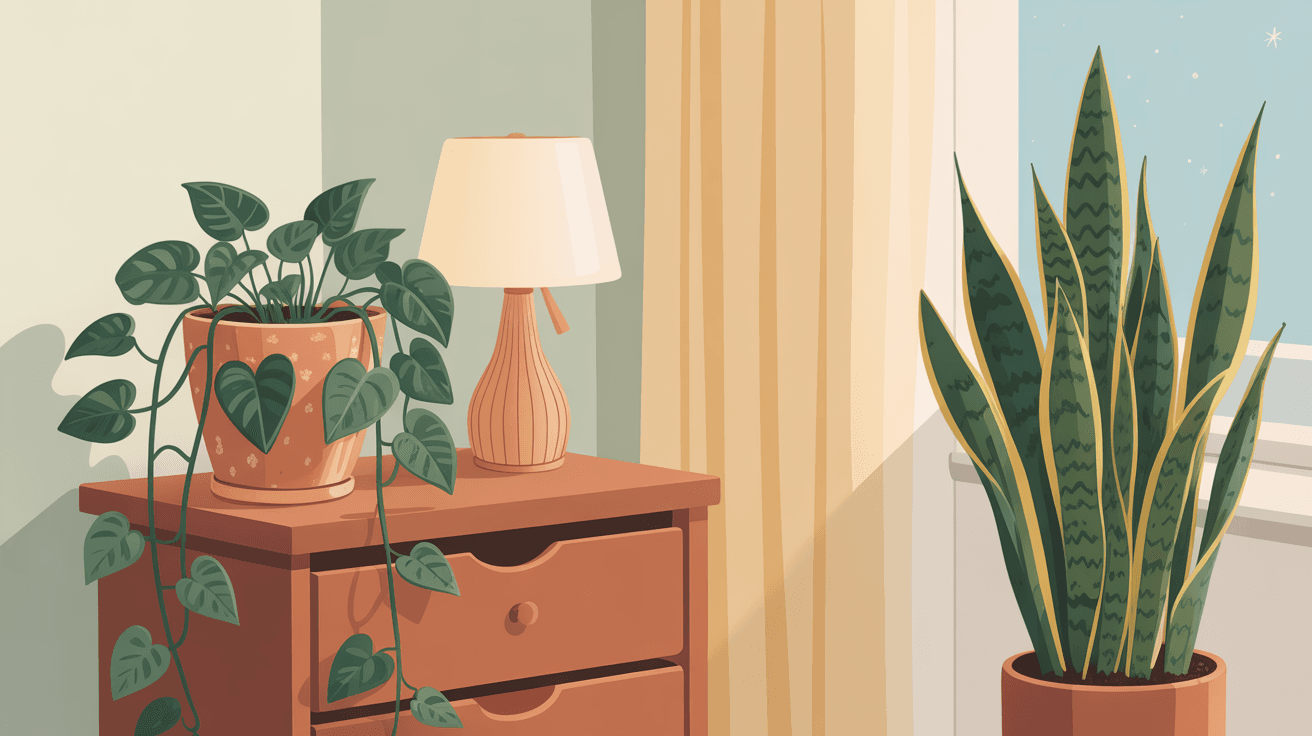
- Pothos — thrives in low to medium light, tolerates irregular watering, and trails beautifully from a shelf or hanging planter.
- Snake plant — extremely drought-tolerant and comfortable in dim corners, making it close to indestructible for a nightstand spot.
- ZZ plant — glossy, upright, and happy to be ignored for weeks at a time if you forget to water.
- Peace lily — tolerates lower light and will droop dramatically when thirsty, so it tells you exactly when it needs a drink.
- Parlor palm — a soft, textural option that handles indirect light well and adds a gentle jungle feel without needing a sunny window.
If you share your bed with a curious cat or dog, note that peace lilies are mildly toxic to pets, so a pothos, snake plant, or parlor palm placed safely out of reach is a better bet, or opt for a pet-safe pick like a Boston fern or calathea instead.
A few placement tips
Keep plants a foot or two away from radiators, vents, or drafty windows, since bedrooms often have the most temperature variation in the house depending on the season. A simple pebble tray or a small humidifier nearby can help if your heating system dries the air out once fall arrives. And if your bedroom window faces north or is heavily curtained, don’t force a sun-loving plant into that spot out of hope. Pick species suited to the light you actually have, not the light you wish you had.
There’s also a genuine wellness case for bedroom plants that has nothing to do with oxygen: greenery has a well-documented calming effect, and tending to a plant as part of a wind-down routine can be a small, grounding ritual before sleep. That’s reason enough to bring one in.
This article was written with AI assistance and edited by the Potted & Proud team to make sure the plant care advice holds up.
If your bedroom plant collection is growing, so is the excuse to celebrate it, and that’s exactly the kind of thing our houseplant-lover tees, mugs, and gifts at Potted & Proud were made for.
Frequently Asked Questions
Do houseplants really take oxygen away from you while you sleep?
Not in any meaningful way. Plants do release a small amount of carbon dioxide overnight, but the amount is far too small to affect air quality or sleep in a normal bedroom with one or a few plants.
What’s the easiest houseplant to keep in a low-light bedroom?
Snake plants and ZZ plants are among the most forgiving choices, tolerating low light and infrequent watering without much fuss.
Are all houseplants safe to keep in a bedroom with pets?
No, some common bedroom plants like peace lilies are mildly toxic to cats and dogs. Choose pet-safe options such as pothos (kept out of chewing reach), parlor palms, or Boston ferns if pets share the room.