Houseplants That Crave Humidity (Summer Care Guide)
If you’ve ever watched a fern crisp up at the edges or a calathea curl its leaves into little scrolls, you’ve met the humidity problem firsthand. Summer air conditioning, in particular, is sneaky: it cools a room while quietly wringing the moisture out of the air, leaving tropical plants gasping even though the temperature feels comfortable to us. Here’s how to know which of your plants actually need extra humidity, and how to give it to them without turning your living room into a rainforest.
Why humidity matters more than people think
Most popular houseplants evolved in tropical or subtropical understories, where humidity regularly sits between 60 and 90 percent. Indoor air, especially with air conditioning or heating running, often hovers closer to 30 to 40 percent. That gap is where problems start: leaf edges brown and crisp, new growth emerges smaller than the last leaf, spider mites move in (they thrive in dry air), and some plants simply stop pushing out new growth altogether.
The good news is that humidity stress is one of the more fixable plant problems once you know what to look for.
Houseplants that require high humidity
Some plants tolerate average household air just fine. Others really do sulk without extra moisture. Plants that tend to need higher humidity include:
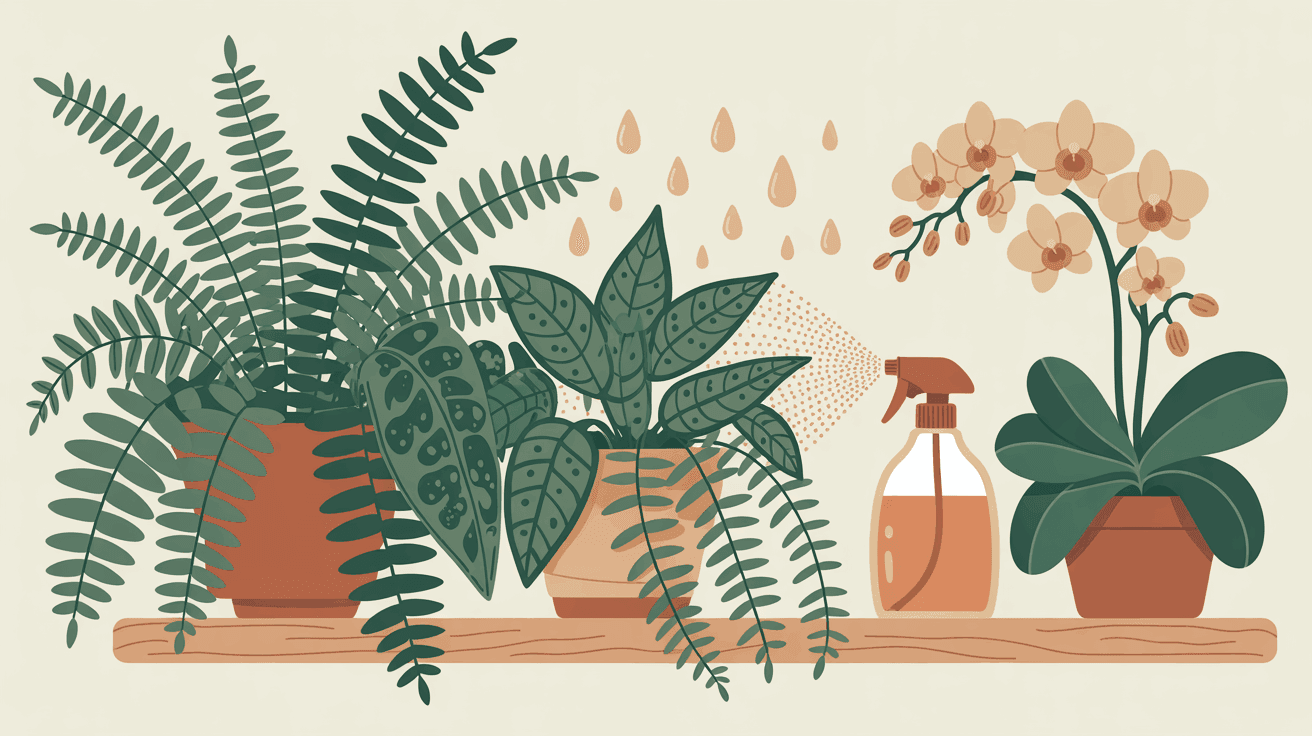
- Ferns (maidenhair, bird’s nest, staghorn) — among the most humidity-hungry houseplants; maidenhair ferns in particular will crisp up fast in dry air
- Calatheas and marantas (prayer plants) — notorious for curling or browning leaf edges when the air is too dry
- Fittonia (nerve plant) — will visibly wilt within hours in low humidity
- Alocasia and colocasia — prone to crispy leaf margins without adequate moisture
- Orchids — many epiphytic orchids naturally grow with humid air moving around their roots
- Peace lilies and anthuriums — appreciate humidity, though they’re more forgiving than the plants above
By contrast, plants like pothos, snake plants, ZZ plants, and most succulents are naturally adapted to drier conditions and rarely need any humidity help at all — which is worth knowing before you assume every plant in your collection needs the same treatment.
Easy ways to raise humidity around your plants
You don’t need a greenhouse or an expensive setup. A few practical, low-effort options:
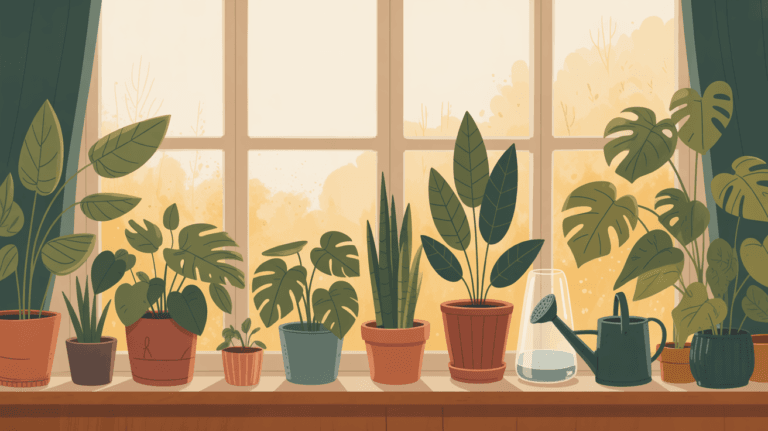
- Group plants together. Plants naturally release moisture through their leaves (transpiration), so clustering several pots creates a slightly more humid microclimate around all of them.
- Use a pebble tray. Fill a shallow tray with pebbles, add water just below the top of the stones, and set the pot on top. As the water evaporates, it raises humidity right around the foliage — without letting roots sit in water.
- Run a small humidifier. This is the most reliable fix for a cluster of humidity-loving plants, especially in air-conditioned rooms. Even an inexpensive tabletop unit running a few hours a day makes a noticeable difference.
- Move plants out of direct airflow. Air vents, fans, and drafty windows all speed up moisture loss from leaves, so relocating a fussy fern away from the AC vent alone can solve a lot of browning.
- Skip misting as a long-term fix. A quick spritz feels helpful, but the humidity boost fades within minutes and frequent wet leaves can actually invite fungal issues on some plants. It’s fine occasionally, but not a substitute for the methods above.
This article was written with AI assistance and edited by the Potted & Proud team, because we’d rather you get accurate care info than a wall of fluff.
And once your calathea’s leaves are uncurling and your ferns are looking lush again, you’ll want an excuse to show off the collection — that’s exactly what our plant-lover tees and gifts are for, made for people who talk to their fittonia and mean it.
Frequently Asked Questions
How do I know if my plant needs more humidity?
Watch for browning or crisping along leaf edges (not the whole leaf), curling leaves that spring back after misting, and new growth that’s noticeably smaller or more stunted than older leaves. If watering is consistent and light is adequate but these symptoms persist, dry air is a likely culprit.
Can I use a hygrometer to check my home’s humidity?
Yes — a basic digital hygrometer costs very little and takes the guesswork out entirely. Most humidity-loving houseplants are happiest between 50 and 60 percent; if your reading is consistently under 40 percent, it’s worth grouping plants or adding a humidifier.
Will a bathroom or kitchen work as a humid spot?
Often, yes, especially bathrooms with a shower and a window for some light. Just make sure the space still gets enough light for the plant in question, since humidity alone won’t compensate for a spot that’s too dark.