Houseplants That Bring Good Luck (And How to Grow Them)
Long before houseplants were a design statement, they were a good-luck charm. Across cultures — from feng shui practice in China to folk traditions in Latin America and West Africa — certain plants have been tucked into homes and shopfronts for centuries in the hope of inviting prosperity, harmony, or protection. Whether or not you buy into the symbolism, these plants share something more provable: they’re genuinely easy, resilient, and satisfying to grow. Here’s the lore behind the most popular “lucky” houseplants, plus the care they actually need to live up to the hype.
The classic lucky plants
Money tree (Pachira aquatica)
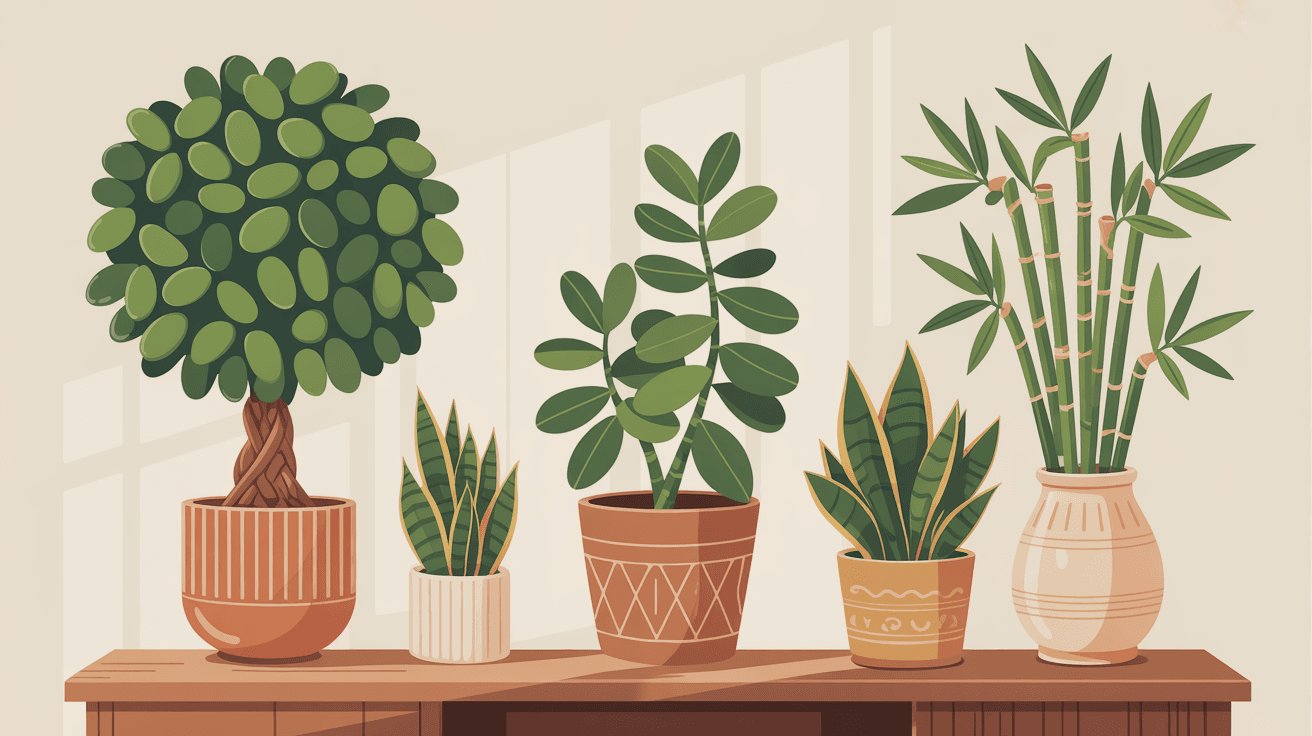
The braided-trunk money tree is one of the most recognizable good-luck plants, popular as a housewarming and business-opening gift in many Asian cultures, where the number of leaflets on each stem (ideally five) is said to carry extra meaning. Practically speaking, it’s a forgiving tropical plant: give it bright, indirect light, let the top couple of inches of soil dry out between waterings, and keep it somewhere warm and draft-free. Overwatering is the most common way to lose one, so when in doubt, wait.
Jade plant (Crassula ovata)
Sometimes called the “friendship tree” or “money plant,” jade’s round, coin-shaped leaves are the likely source of its lucky reputation. As a succulent, it wants the opposite treatment of most tropicals: as much direct sun as you can give it, and soil that dries out completely before the next watering. A jade plant left mostly alone on a sunny windowsill will often outlive the person who bought it — they’re famous for being passed down through families.
Lucky bamboo (Dracaena sanderiana)
Despite the name, this isn’t bamboo at all — it’s a Dracaena, and it’s traditionally arranged in stalks of a specific number (often 3, 5, or 8) based on feng shui number symbolism. It’s one of the few popular houseplants that’s genuinely happy growing in a vase of water with pebbles for support, though it will also grow in well-draining potting mix. Keep it out of direct sun, which scorches the leaves, and change plain water weekly if you’re growing it hydroponically.
Snake plant (Dracaena trifasciata)
In feng shui, snake plant’s upright, sword-like leaves are associated with cutting away negative energy and protecting the home, which is why it’s a common choice for entryways. It’s also about as low-maintenance as houseplants get: tolerant of low light, happy going weeks between waterings, and slow-growing enough that it rarely needs repotting.
Orchids
In Chinese culture, orchids are linked to refinement, integrity, and abundance, and they’ve become a staple gift for graduations, weddings, and new ventures. They’re less “set it and forget it” than the others on this list — most orchids want bright indirect light, a chunky bark-based orchid mix rather than regular potting soil, and a thorough soak once a week rather than a daily sprinkle. Watch the roots: silvery-green roots mean it’s hydrated, while shriveled gray roots mean it’s thirsty.
Where to put them for the most impact
If you want to lean into the tradition, feng shui commonly suggests placing money trees or jade plants near an entryway or in the southeast “wealth corner” of a room, and keeping snake plants near doors as a kind of protective threshold planting. You don’t need to follow any of this precisely — grouping a few lucky plants together on a sunny console table or plant stand makes a lovely display regardless, and clustering plants with similar light and water needs also happens to make them easier to care for.
Frequently Asked Questions
Do lucky plants actually need different care than other houseplants?
No — the “lucky” label is cultural, not botanical. Each plant still needs to be cared for according to what it actually is: succulents like jade want sun and dry soil, tropicals like the money tree want humidity and evenly moist (not soggy) soil, and so on.
Can I give a lucky plant as a gift even if the recipient isn’t superstitious?
Absolutely. These plants are popular gifts because they’re attractive and easy to keep alive, not just for the symbolism — a money tree or jade plant works as a thoughtful, low-maintenance gift for almost anyone with a sunny windowsill.
Why are the leaves on my lucky bamboo turning yellow?
Yellowing lucky bamboo is almost always a water issue — either the water hasn’t been changed often enough (tap water minerals build up) or it’s getting too much direct sun. Switch to filtered or distilled water, change it weekly, and move it out of direct light.
This article was written with AI assistance and edited by the Potted & Proud team.
Whether you’re growing a money tree for the fortune or just the foliage, we think every plant person deserves a little something to celebrate the obsession — browse Potted & Proud’s houseplant-lover tees and gifts for your fellow plant parents.