Why Are My Houseplant’s Leaves Turning Yellow?
You walk past your pothos on the way to the kitchen and there it is: a leaf gone buttery yellow overnight, sitting among all its healthy green neighbors like it’s trying to tell you something. Yellow leaves are one of the most common reasons plant parents panic-Google their way into the night, and the honest answer is that yellowing can mean a dozen different things depending on which leaves, where on the plant, and how fast it’s happening. Here’s how to actually figure out what’s going on and what, if anything, to do about it.
The Most Common Culprits Behind Yellow Leaves
- Overwatering. This is the number one cause, by a wide margin. Soggy roots can’t take up oxygen properly, and the plant responds by yellowing and dropping leaves, often several at once, often lower leaves first. If the soil has been consistently damp rather than drying out between waterings, start here.
- Underwatering. Less common but still happens, especially with plants in small pots that dry out fast. Leaves usually yellow and feel crispy or thin rather than soft and mushy.
- Natural aging. Every plant sheds its oldest leaves eventually. If it’s one lower, older leaf turning yellow while the rest of the plant looks fine, that’s not a problem to solve, it’s just the plant doing normal plant things.
- Light changes. As days get shorter heading into late autumn, a plant that was perfectly happy in July can suddenly be getting a fraction of the light it was used to. Lower leaves, especially on fast growers like pothos and philodendron, will sometimes yellow and drop as the plant reallocates energy to the leaves getting the most light.
- Nutrient deficiency. Plants that haven’t been fed in a long time, especially ones that have been in the same soil for a year or more, can show pale or yellowing new growth as they run out of available nitrogen.
- Temperature stress. A leaf near a drafty window or a heating vent can yellow and drop independent of anything else going on with the plant.
- Pests. Sap-sucking insects like spider mites can cause stippled yellowing, usually with tiny webbing or dots visible if you look closely at the leaf underside.
How to Diagnose What’s Actually Happening
Before you do anything, play detective for a minute:
- Check the soil. Stick a finger an inch or two down. Wet and heavy points toward overwatering; bone dry points toward underwatering.
- Look at the pattern. One old lower leaf: probably normal aging. Several leaves across the whole plant, especially new growth: more likely a watering, light, or nutrient issue.
- Check the roots if it’s severe. If multiple leaves are yellowing fast and the soil has been staying wet, gently slide the plant out of its pot. Healthy roots are usually white or tan and firm. Dark, mushy, or foul-smelling roots point to root rot, which means repotting into fresh, dry soil and trimming away the damaged roots.
- Inspect leaf undersides with a bright light or your phone’s flashlight for any sign of tiny pests or webbing.
What To Do About It
Once you’ve narrowed down the likely cause, the fix is usually straightforward:
- If it’s overwatering, let the soil dry out more between waterings and make sure the pot actually drains. A pot with no drainage hole sitting in standing water is a common hidden culprit.
- If it’s underwatering, water more consistently, and consider sizing up the pot if it’s drying out within a day or two.
- If it’s seasonal light, move the plant closer to a window or rotate it periodically so all sides get a turn facing the light, and don’t panic if growth simply slows for the next few months, that’s normal dormancy, not decline.
- If it’s nutrients, a diluted, balanced liquid fertilizer during active growing months can help, though it’s worth holding off on heavy feeding once a plant’s growth has slowed for winter.
- If it’s pests, isolate the plant from your other greenery and treat according to the specific pest before it spreads.
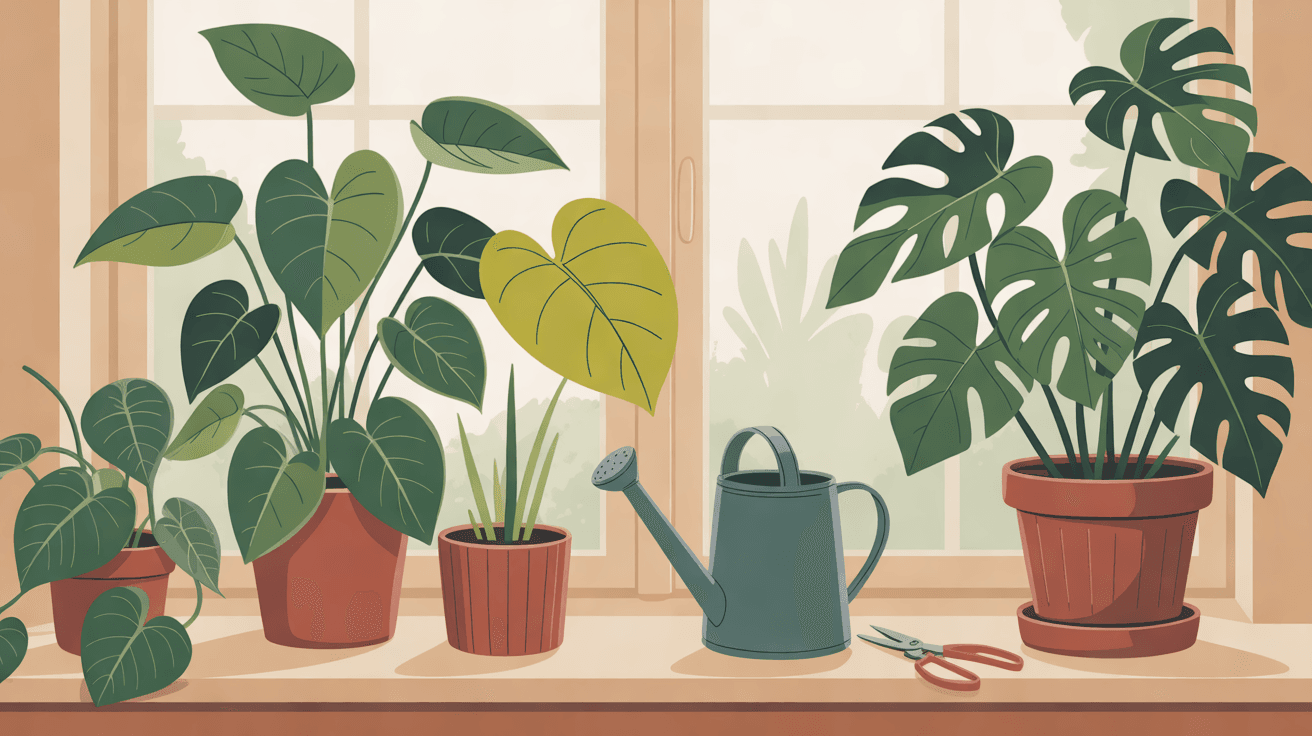
In any case, it’s fine to snip off a fully yellowed leaf once it’s clearly not coming back; the plant has already pulled what nutrients it can from it, and removing it tidies things up and redirects energy to healthier growth.
This guide was put together with AI assistance and reviewed and edited by the Potted & Proud team, because even a yellow-leaf deep dive deserves a human sanity check. And if diagnosing your monstera’s drama has you in a plant-parent mood, our tees, hoodies, and gifts for houseplant obsessives are designed for exactly this kind of day.
Frequently Asked Questions
Should I cut off a yellow leaf right away?
If the leaf is entirely yellow or brown with no green left, yes, it’s safe to remove at the base. If it’s only partially yellow, you can leave it a little longer while the plant finishes pulling nutrients from it, then trim it once it’s fully spent.
Can a yellow leaf turn back to green?
Generally no. Once a leaf has yellowed significantly, especially from age or nutrient loss, it won’t regreen. The focus should be on fixing the underlying cause so new leaves grow in healthy, rather than trying to save the yellow one.
Is it normal for houseplants to lose more leaves in fall and winter?
Yes, to a degree. Shorter days and lower light mean many houseplants naturally slow down and shed a few older leaves as they conserve energy. A leaf or two here and there isn’t cause for alarm; a sudden wave of yellowing across the whole plant is worth investigating further.