Dry Winter Air Is Hurting Your Houseplants: Fix It
Turn the heat on and your houseplants start sulking: crispy leaf tips, curling edges, leaves that drop for no obvious reason. It’s rarely the cold itself causing the damage — it’s what your furnace or radiator does to the air once it’s running. Central heating can pull indoor humidity down to levels drier than a desert, and most popular houseplants evolved in forests where the air stayed humid year-round. Here’s what’s actually happening, and how to fix it without turning your living room into a greenhouse.
Why Heated Air Is So Hard on Plants
Warm air holds more moisture than cold air, but heating systems don’t add moisture — they just circulate dry, warmed air through your home. The result is relative humidity that can drop into the teens or low 20% range during winter, compared to the 40-60% range many tropical houseplants prefer. Low humidity speeds up water loss through a plant’s leaves (a process called transpiration), while the plant’s roots are often sitting in cooler, slower-draining soil. That mismatch is what produces the classic winter symptoms: brown, crispy leaf margins, leaf curl, and buds that drop before they open.
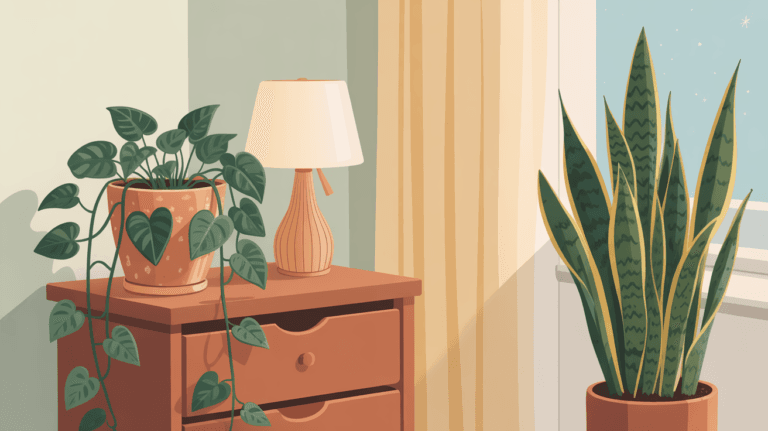
Plants with thin or delicate foliage feel it fastest — calathea, maranta, ferns, and alocasia are frequent complainers. Thicker-leaved or succulent plants like pothos, snake plant, and ZZ plant tolerate dry air much better, which is worth remembering when you’re deciding where to put a humidity-loving plant versus a tougher one.
Signs Your Plant Is Struggling With Dry Air (Not Underwatering)
- Crispy brown tips or edges on otherwise healthy-looking leaves — a classic low-humidity signature, especially on ferns and calatheas.
- Leaves curling inward to reduce their surface area and slow moisture loss.
- Flower buds or new growth dropping before they fully develop.
- Soil drying out unusually fast, even though you haven’t changed your watering routine.
It’s easy to mistake these for underwatering and respond by watering more, which just adds a second problem (soggy roots) on top of the first. Check the soil before you reach for the watering can — if it’s still damp a few inches down, the leaves are telling you about the air, not the soil.
How to Raise Humidity Around Your Plants
Group plants together
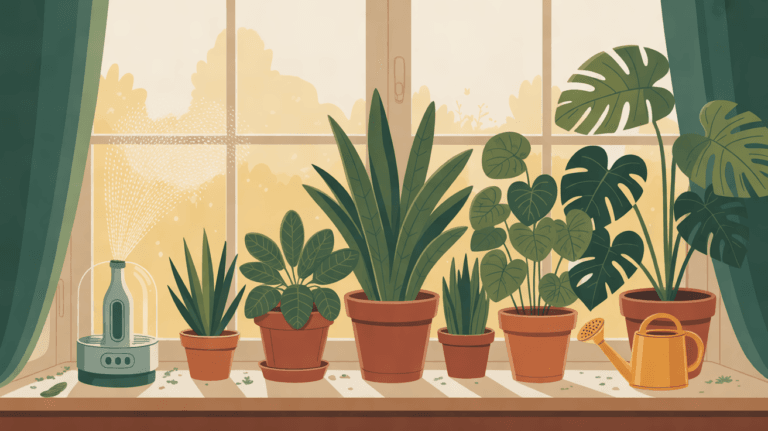
Plants release moisture through their leaves, and clustering several pots close together creates a small, more humid microclimate around all of them. It’s one of the simplest fixes and costs nothing.
Use a pebble tray
Set a pot on a shallow tray filled with pebbles and a bit of water (keeping the water below the pot’s base so roots don’t sit in it). As the water evaporates, it raises humidity right where the plant needs it.
Run a humidifier
A small room humidifier is the most reliable fix, particularly for a cluster of humidity-loving plants in one spot. Aim for the 40-50% range — comfortable for plants and for your own skin and sinuses during a dry winter, too.
Move plants away from heat sources
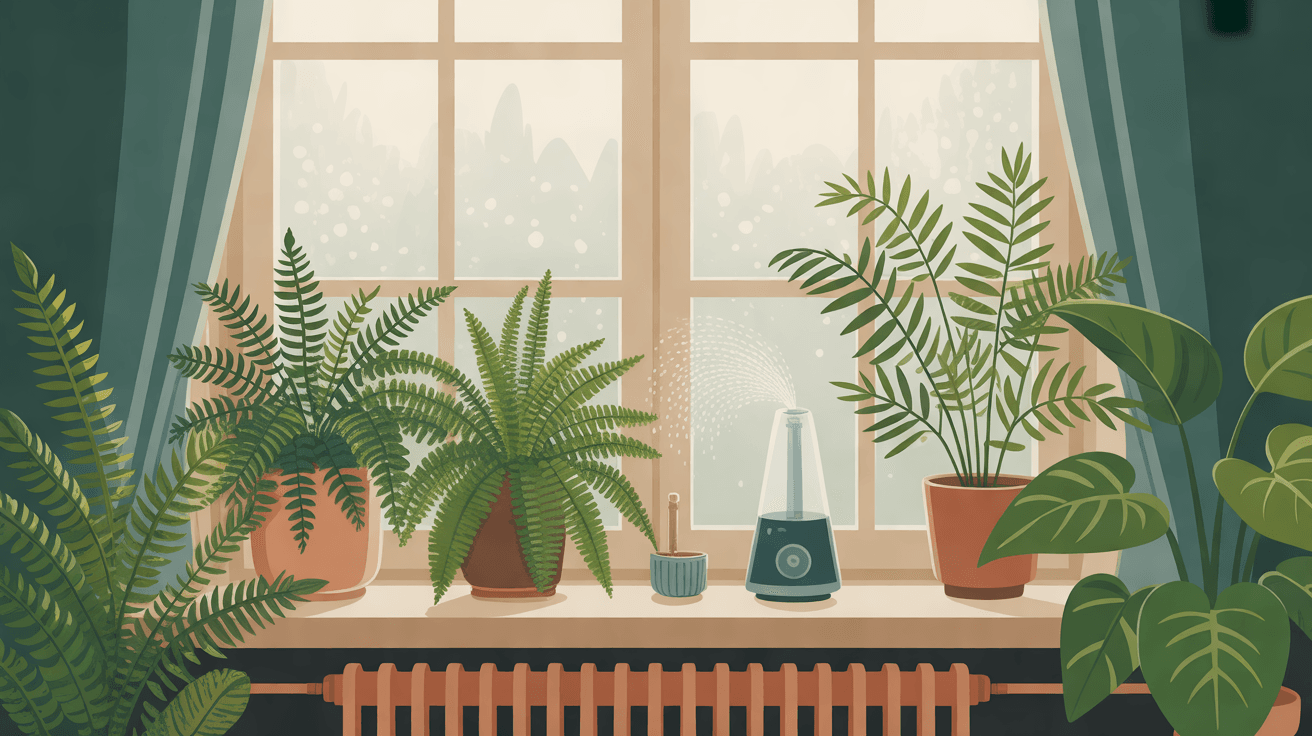
Radiators, forced-air vents, and fireplaces create hot, dry pockets of air that are rougher on plants than the rest of the room. A few feet of distance makes a real difference.
Mist thoughtfully
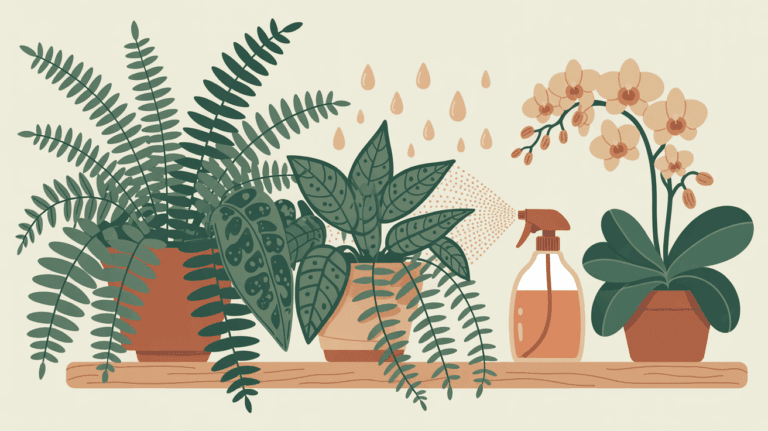
Misting gives a brief humidity boost but evaporates within minutes, so it’s a minor supplement rather than a real fix — and on fuzzy-leaved plants like African violets, it can encourage spotting. Pair it with one of the longer-lasting methods above rather than relying on it alone.
A Quick Winter Checklist
- Check soil moisture by feel before watering — dry air speeds up leaf symptoms faster than soil drying.
- Keep humidity-sensitive plants (ferns, calathea, maranta) grouped and away from vents and radiators.
- Trim off crispy, damaged leaf tips so the plant isn’t spending energy on tissue that won’t recover.
- Wipe dust off leaves occasionally — dusty leaves struggle to regulate moisture as efficiently.
This article was researched and drafted with AI assistance, then reviewed and edited by the Potted & Proud team before publishing.
Frequently Asked Questions
Will low humidity actually kill my houseplant?
On its own, dry air rarely kills a houseplant outright — it stresses it, which shows up as crispy edges and slowed growth. But that stress makes the plant more vulnerable to pests like spider mites, which thrive in dry conditions, so it’s worth addressing even if the plant isn’t in immediate danger.
Do all houseplants need extra humidity in winter?
No. Succulents, cacti, snake plants, pothos, and ZZ plants are naturally tolerant of dry air and generally don’t need any intervention. Save the humidifier and pebble trays for the more sensitive tropical plants, like ferns and calatheas.
Is a humidifier better than misting?
For sustained results, yes. Misting raises humidity for only a few minutes before it evaporates, while a humidifier maintains a steady level around the plant for hours. Misting is fine as an occasional extra, not a primary strategy.
If you’re the type who talks to your plants while you check their soil for the third time this week, we see you — our tees, hoodies, and gifts for plant people were made with exactly that kind of devotion in mind. Browse the Potted & Proud collection next time you’re giving your fern a pep talk.